
The club at Emmen
Before FelixChess became software, it was paper, patience, and a father’s wish to make chess easier to understand. Felix Berner and his son were members of the company chess club - in German, Firmenschach, literally “company chess” or “corporate chess” - at the Eidg. Flugzeugwerke Emmen, the Swiss Federal Aircraft Factory in Emmen.
They played regional tournaments and championships for the federal company’s club. At some point, Felix was asked to teach chess to new members. The basics were manageable. The openings were not. Tables were dry. Books were dense. Variations disappeared into columns of notation before beginners could see the shape of an idea.
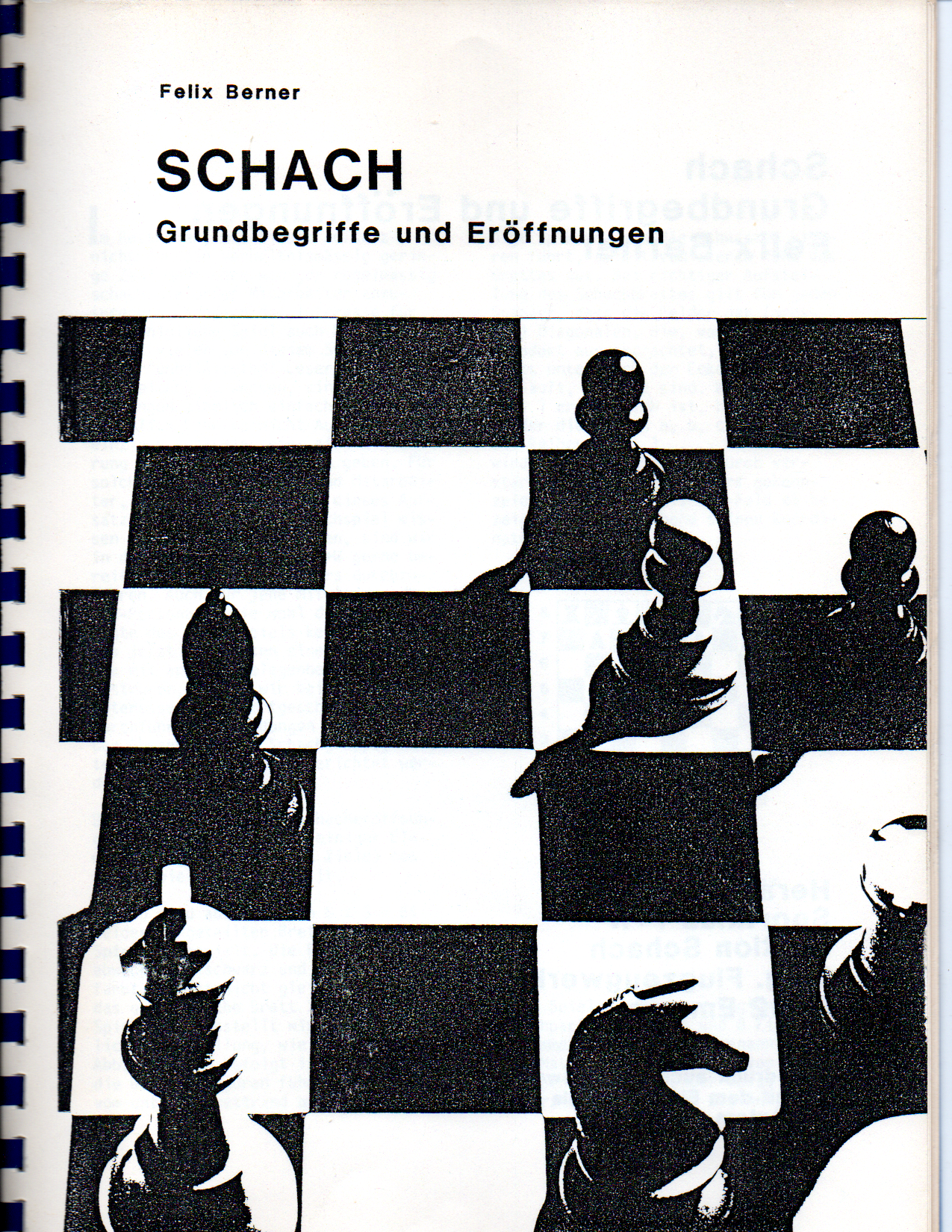
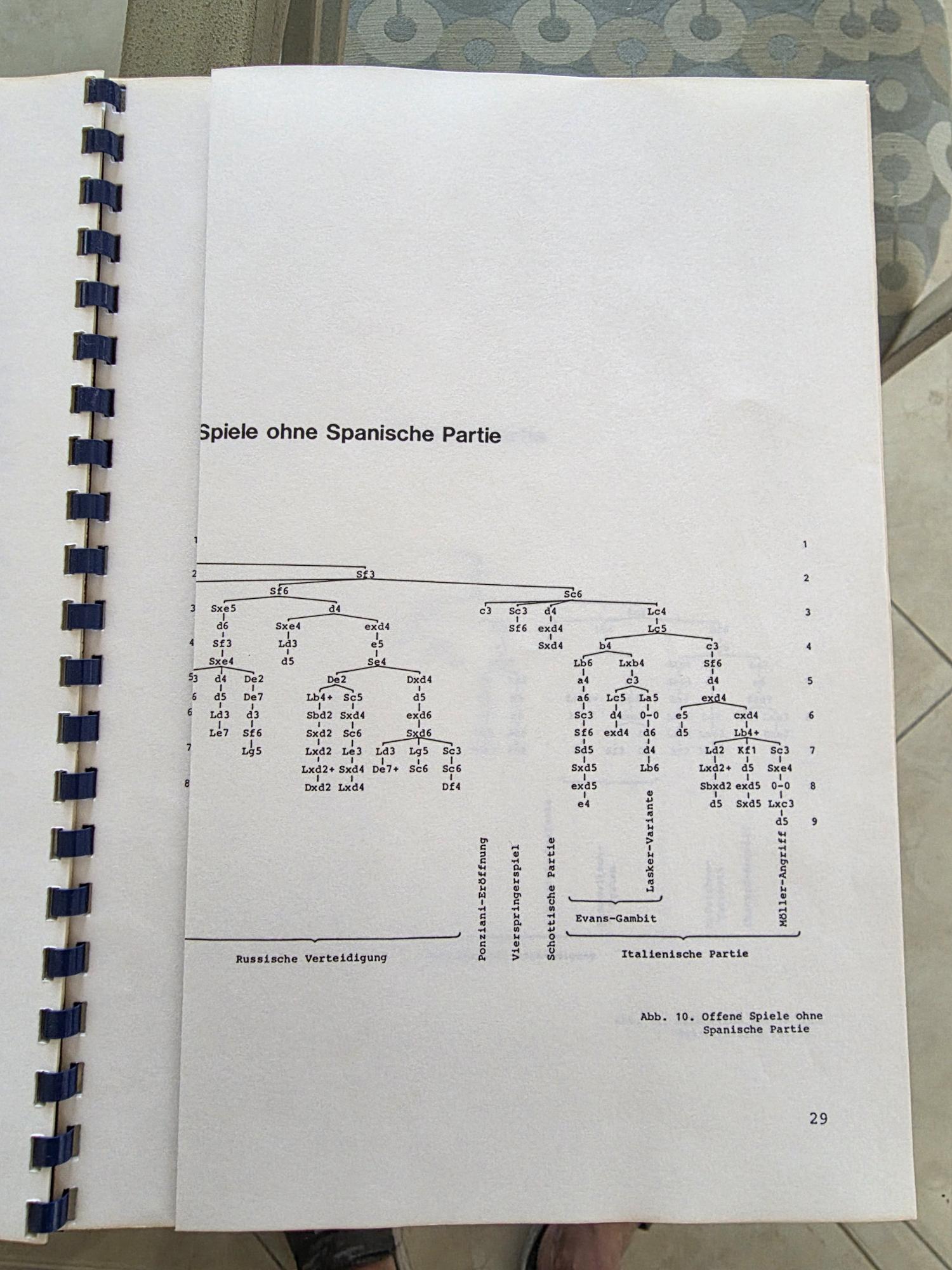
In 1981, Felix Berner - chief engineer for thermodynamics at the Swiss Federal Aircraft Factory - began summarizing the most important variations of each opening in an opening-specific move tree. The result was a brochure called SCHACH - Grundbegriffe und Eröffnungen. It was practical, approachable, and surprisingly beautiful: text to explain the opening, and a foldable page to show the main variations at a glance.
The fold-out dream
New club members loved it. They could read about an opening and then unfold the page to see the entire family of ideas on one sheet. The moves were no longer isolated fragments. They had branches. They had direction. They had memory.
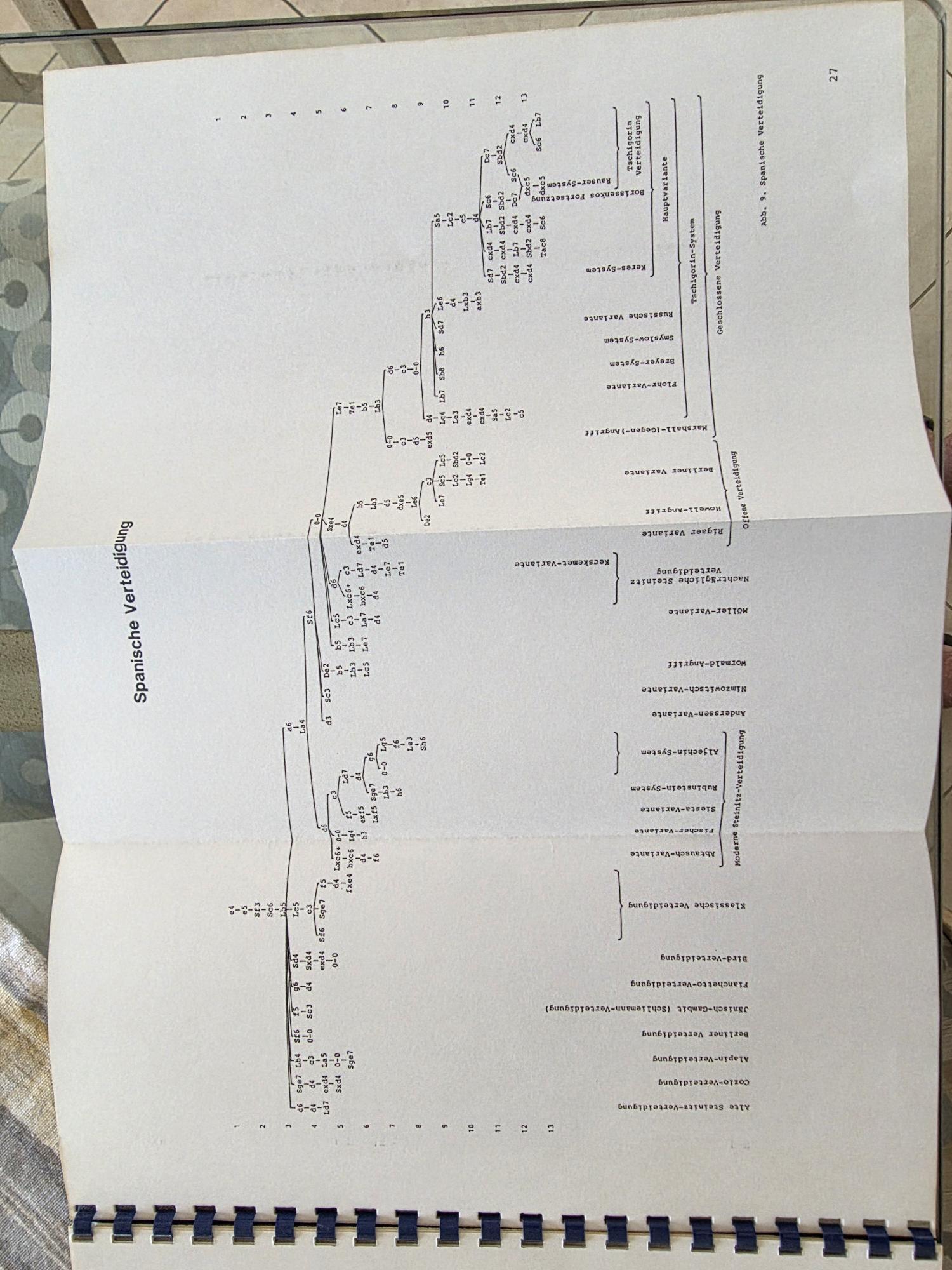
Felix started imagining a full chess book: the popular openings, each with its own fold-out tree. When printing such a book proved too expensive, he tried a second idea: small foldable pamphlets, one per opening, that players could use alongside their normal opening books.
At home, chess books began to pile up. Felix collected variations, comments, symbols for good and bad moves, sample games, evaluations such as += or =, and even player names. He bought a new IBM Kugelkopf typewriter - an IBM Selectric-style “golf-ball” typewriter - with a special chess-figurine typing element. First came hand-drawn branches. Then came carefully typed pages. Then scissors, glue, alignment, and folding.
The largest pamphlet reached roughly three meters wide - about 9.8 feet - and still hangs in the family’s Swiss residence. But the world of the early 1980s did not have an affordable way to print and distribute such fold-out opening maps. The idea paused. A few examples survived.
A short technology bridge
Decades later, the son became a computer scientist specializing in large-scale platforms. He worked with Day Software and its content-management vision, admired the idea of a Content Bus, and became convinced that content repositories could someday replace many traditional relational-database patterns for complex object structures.
That conviction continued through JECIS, a JCR-based eCommerce system intended to run inside Adobe AEM, and later into Aegis XP: a full digital experience platform built with OSGi, Apache Sling, Apache Oak, and HTL/Sightly.
Then came the chess connection again. During the Covid years, online chess returned to daily life. Sites such as chess.com and lichess.org made play, tournaments, puzzles, and analysis wonderfully accessible. But opening learning still often felt familiar: tables, videos, and coaching - useful, but not always a clear map.
And the old fold-out pages came back to mind.
The idea becomes dynamic
What if millions of games were not only stored, but used to build dynamic move trees? What if an opening could be selected and the platform could instantly draw the branches that real games had taken? What if the tree did not need to be printed once, but could be regenerated from living data?
In 2024, experiments began with a hierarchical content model for chess games. In 2025, the first realistic FelixChess move tree appeared. Combined with a detailed ECO-code system, any opening could become an interactive tree of moves from the repository.
Then the idea widened. If FelixChess could build a tree by opening code, it could build one by player. Select a player and see the shape of their games. Select an event and see the tournament’s branches. Select a Chess960 SPID and prepare for a Freestyle round from every game played with that starting position.
FelixChess is not only a tribute to an old brochure. It is a continuation of its spirit: make chess knowledge visible, structured, and human. What began with a thermodynamics engineer, a chess club, and a typewriter now lives through modern platform engineering - still carrying the same simple promise: help players see the game more clearly.
Almost fifty years later
Some ideas arrive before the world is ready to print them. Some wait quietly in folded pages, family memories, and unfinished prototypes. FelixChess is the moment one of those ideas finally unfolds.